
Uncover the Dust Bowl Trail
Discover the Dust Bowl Trail in Oklahoma, New Mexico and Texas, a forgotten journey through history with powerful landmarks, hidden heritage sites, and inspiring stories of resilience.
Discover a Historic Road Trip Through Oklahoma, New Mexico and Texas and Uncover the Dust Bowl’s Powerful Past
Before the Dust Bowl reshaped the Southern Plains, farming communities in the panhandle regions relied on methods they believed could withstand the harsh climate. Understanding how these practices worked and why they ultimately failed helps explain the scale of the disaster that followed.
The panhandle areas were farmed using a dryland farming technique, a type of agriculture that relies on natural rainfall rather than man‑made irrigation. This method focuses on retaining rainwater in the soil, conserving moisture during dry weather by reducing evaporation, and planting crops that can tolerate drought conditions. Common drought tolerant crops included wheat, corn, sorghum, oats, barley, and others suited to the region’s limited rainfall.
Dryland farming spread across the panhandle in the early 1900s and initially saw steady success. However, four severe droughts in 1930 and 1931, 1934, 1936, and again in 1939 and 1940 hit the region so quickly and intensely that recovery became impossible. These droughts, combined with the widespread abandonment of soil preservation practices in response to rising production demands, set the stage for the Dust Bowl.
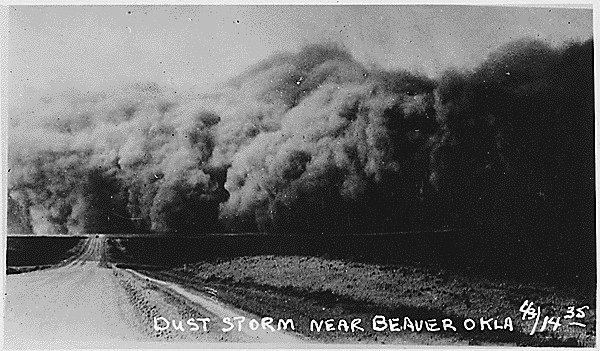
The areas most severely affected included the Oklahoma and Texas panhandles, western Kansas, eastern Colorado, and northeastern New Mexico. An estimated 300 million tons of soil were stripped from the region and carried across large portions of the eastern United States. Even today, the long-term effects of the Dust Bowl remain visible across these landscapes. To learn more about the Dust Bowl and explore its history firsthand, visit the sites below.
Key notes
- The Southern Plains were shaped by ranching, railroads, and early agricultural expansion.
- The Dust Bowl brought severe environmental, economic, and social hardship to communities across OK, TX, and NM.
- Museums and historic sites today preserve this history and highlight the region’s resilience.
Goodwell, Oklahoma
The town of Goodwell was originally established as a railroad community, with early homes consisting of dugouts, tents, and simple shacks. Though sparsely populated, the town quickly became closely connected to the surrounding communities and remains strongly tied to Oklahoma Panhandle State University today. During the 1930s, this region was hit especially hard by the Dust Bowl, as frequent and intense dust storms swept across the landscape. These storms reshaped daily life in Goodwell and left lasting effects that can still be traced in the area’s history.
No Man’s Land Historical Society
- Relevance: The No Man’s Land Historical Society preserves the rich local history of Goodwell and the surrounding Oklahoma Panhandle. Through its collections and exhibits, the Society documents how the Dust Bowl shaped the region, highlighting its impact on residents both in the 1930s and in the generations that followed. Today, the museum serves as an important resource for understanding how Goodwell’s past continues to influence the community’s identity and resilience.
- Address: 207 Sewell Street, Goodwell, Oklahoma 73939
- Cost: Free
- Hours: Tuesday-Saturday 10am – Noon and 1pm-4pm. Closed Sunday and Monday.
Boise City, Oklahoma
Boise City sits in Cimarron County, right in the heart of the Dust Bowl region, making it one of the most historically significant towns on the Oklahoma Panhandle. Founded in 1908 by land developers, the town was heavily promoted as an elegant and upscale place to live. When new property owners arrived, however, they quickly discovered that none of the promised amenities actually existed. Despite this early setback, the community continued to grow, and Boise City officially incorporated on July 20, 1925.
As the Dust Bowl swept across the Southern Plains in the 1930s, Boise City became one of the most severely affected towns in the country. The relentless dust storms, crop failures, and economic hardships reshaped daily life and left a lasting mark on the region’s landscape and identity. Today, Boise City remains an important destination for travelers interested in Dust Bowl history, offering a deeper look into the communities that endured some of the era’s most extreme conditions.
Cimarron Heritage Center
- Relevance: The Cimarron Heritage Center documents and preserves the broader history of Cimarron County while also highlighting the powerful story of the Dust Bowl. Spread across 3.5 acres of historic buildings and curated exhibits, the Heritage Center gives visitors the opportunity to step inside an authentic Dust Bowl House and experience what daily life looked like during the 1930s.
- Address: 1301 North Cimarron Avenue, Boise City, Oklahoma 73933, United States
- Cost: Free
- Hours: Monday – Saturday 10:00-12:00 & 1:00-4:00, Closed during lunch, Sundays and Major Holidays
Clayton, New Mexico
Clayton, New Mexico emerged in the late 1880s as a growing railroad town at the center of the high plains. The new settlement quickly attracted cattle and sheep ranchers, and before long, farmers began establishing homesteads across the surrounding landscape. As the town expanded, Clayton developed both industrially and agriculturally, becoming an important hub for ranching, shipping, and trade in northeastern New Mexico.
This period of growth continued until the devastating effects of the Dust Bowl swept across the region. Severe drought, dust storms, and widespread crop failures reshaped life in Clayton and left a lasting mark on the community’s history. Today, the town stands as a key place to explore the broader story of the Dust Bowl and the resilience of the people who lived through it.
Herzstein Memorial Museum
- Relevance: Named after Morris Herzstein, a prominent merchant and rancher who settled in Clayton in the 1890s, the Herzstein Memorial Museum preserves the region’s local history and culture. The museum houses the largest Works Progress Administration collection in the state of New Mexico, offering visitors a rare look at WPA art, documents, and community projects. It also features a dedicated Dust Bowl exhibit that highlights daily life in the 1930s and the challenges faced by families across the high plains.
- Address: 22 S. 2nd St. Clayton, New Mexico 88415
- Cost: Free, Donations accepted
- Hours: Tuesday-Wednesday 9:30am – 3pm, Thursday-Friday 9:30am-4:30pm, Saturday 9:30am-1pm. Closed Sunday and Monday.
Dalhart, Texas
Incorporated in 1902, Dalhart quickly became a central hub for some of the region’s largest ranching operations, including the well‑known XIT Ranch. As the town grew, it also played an important role in developing short‑line railways and supporting the sale of oil leases, which helped shape the economic landscape of the northwest Texas Panhandle.
By the 1930s, however, Dalhart faced a new and devastating challenge as “black blizzards,” or severe dust storms, swept across the area. These storms brought widespread environmental damage and serious health concerns, marking Dalhart as one of the communities deeply affected during the Dust Bowl era.
The XIT Museum
- Relevance: The XIT Museum began as a temporary exhibit created each year for the XIT Rodeo and Reunion in Dalhart, Texas. What started as a small display of artifacts from former cowboys and local historians has grown into a comprehensive collection that highlights the history of the town and surrounding counties. The museum also features a dedicated Dust Bowl exhibit that explores the development of the plains, the rise of agriculture and ranching, and the challenges communities faced during the 1930s. Today, the XIT Museum offers visitors an engaging look at the heritage of the northwest Texas Panhandle and the people who shaped it.
- Address: 108 East 5th Street, Dalhart, Texas, 79022
- Cost: Free, Donations accepted
- Hours: Tuesday-Saturday 9am-5pm.
Perrytown, Texas
Perryton, Texas was founded in 1919 and soon designated as the county seat of Ochiltree County. The new town quickly attracted farmers and became an important mailing station between Amarillo, Texas and Wichita, Kansas, helping connect the northern Panhandle to larger regional markets. As nearby oil reserves were discovered and drilling expanded, Perryton’s population grew and the community developed into a key economic center for the area.
Like many towns across the Southern Plains, Perryton faced significant hardship during the Dust Bowl. Intense dust storms, crop failures, and economic strain reshaped daily life and left lasting effects on the community and its surrounding farmland. Today, Perryton remains an important place to explore the broader story of the Dust Bowl and the resilience of Panhandle communities.
Museum of the Plains
- Relevance: The Museum of the Plains, founded in 1975, began with artifacts donated by local residents and has since grown into a comprehensive center for regional history. The museum features a variety of permanent and rotating exhibits that explore the cultural, agricultural, and economic development of the Texas Panhandle. One of its key displays focuses on the Dust Bowl, offering insight into how the era shaped local communities and transformed life across the plains.
- Address: 1200 North Main Street, Perrytown, Texas 79070
- Cost: Free, Donations accepted
- Hours: Monday – Friday 9:00 a.m. – 5:00 p.m. Saturday 10:00 a.m.- 5:00 p.m. Sunday – Closed
Conclusion
The Southern Plains carry a powerful legacy shaped by ranching, railroads, agriculture, and the profound impact of the Dust Bowl. Across Oklahoma, Texas, and New Mexico, each community along this trail reveals a different piece of the region’s story and the people who endured its harshest years. Today, the museums, historic sites, and preserved landscapes of the Plains offer visitors a meaningful way to explore this history and understand how these towns rebuilt, adapted, and continue to honor their past. Together, they form a living record of resilience on the American Plains.
My Sources
Agriculture in the Oklahoma Panhandle 1898-1942 by W. David Baird
Cereal Crops in the Panhandle of Texas – UNT Digital Library
Clayton · Union County — Clayton Union County Economic Development Partnership
Dalhart, TX l Texas State Historical Association
Dry Farming l The Encyclopedia of Oklahoma History and Culture
Dryland Farming Overview – ScienceDirect
Dust Bowl | The Encyclopedia of Oklahoma History and Culture
Dust Bowl: Causes, Definition & Years | HISTORY
Dust Bowl l National Drought Mitigation Center
Goodwell | The Encyclopedia of Oklahoma History and Culture
New Mexico Tells New Mexico History | History: The Great Depression and World War II
No Man’s Land Historical Society